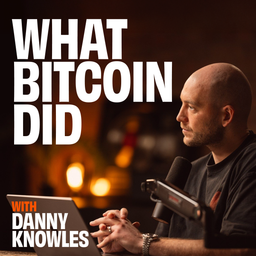
Financialization has destroyed local community care
“There's been a financialization of everything, and an erosion of local communities and local power that together have created this precarious dystopia. In this push to automation, in this frenzy around AI and other automation technologies, there has been almost a total collapse of care and it's care that knits a society together.”
Counter-elites are driving current political instability
“Intra-elite conflict manifests as counter elites knocking established elites off of their throne and taking control. And the way they typically do this is they can't do it alone. So they have to enlist people who aren't elites, the broader population, to support their cause.”
Secondary layer networks are rapidly maturing into professional-grade infrastructure - the reliability of the Lightning Network has transitioned from a 65% success rate to over 95%, signaling an inevitable move toward 99.999% uptime as the stack ossifies.
“And today, [Lightning] is over 95% and it's increasing. But payments need to work all the time. It needs to be 99.999. And so you have this payment network now on top.”
Self-custody is the only way to eliminate counterparty risk
“We've seen multiple exchanges face liquidity crunches even this year, proving that the lesson of 'not your keys, not your crypto' is timeless. Using a cold storage solution like Arculus ensures that your assets are physically isolated from the internet and the reach of failing platforms. It's the only way to sleep soundly when the market is dropping double digits in a single afternoon.”
Paper Bitcoin via ETFs poses a centralization threat
“The biggest lie circulating right now is that owning an ETF is the same as owning Bitcoin. When you hold an ETF, you're holding a paper claim on a centralized entity's ledger, which gives them the voting power and the network influence. If you don't hold your private keys, you're essentially just participating in a digitized version of the old banking system we tried to escape.”
“I think we're living through a collective national identity crisis. Who are we? First of all, who have we become as a country? Second of all, where are we going to go from here? I think we have a lot of questions now about the efficacy of democratic institutions, even something as simple as elections to meaningfully change the direction in which the country is going.”
Physical energy constraints prevent the systemic co-option of the network - unlike centralized tokens or legacy finance systems, Bitcoin's base layer is anchored by energy, ensuring that institutional interest or government adoption cannot easily alter its core decentralized principles.
“The base layer of Bitcoin is an open, decentralized and secure protocol bounded by energy.”
Institutional adoption failed to stabilize Bitcoin price volatility
“We were told that once the big institutions arrived with their ETFs and their massive capital, that the wild swings would settle down. Instead, what we're seeing in 2026 is that institutional players are actually exacerbating the volatility by using Bitcoin as a liquidity hedge during broader market downturns. The stability narrative was a lie used to get retail comfortable with institutional entry.”
“I think freedom of speech is probably at the top of my radar right now. I think we've gone from a climate where maybe there was cancel culture in the culture itself to one in which that cancel culture has now moved to the state. And we're seeing increasing calls for censorship and for government sanctions against individuals who are exercising that right.”
America is experiencing a national identity crisis
“I think we're living through a collective national identity crisis. Who are we? First of all, who have we become as a country? Second of all, where are we going to go from here? I think we have a lot of questions now about the efficacy of democratic institutions, even something as simple as elections to meaningfully change the direction in which the country is going.”
Professional tax services are essential for major holders
“As we see more regulatory scrutiny in 2026, the tax man is coming for every single trade you've made over the last cycle. Using a professional crypto tax service isn't just about convenience anymore; it is about survival because the IRS has updated their algorithms to track on-chain movements with terrifying precision. You have to be proactive about your tax liability before the end of the fiscal year.”
“When we start to question the integrity of elections as such, what that suggests to me is that the social trust of the social fabric is falling apart. And that's an issue that can't be solved from the top down. It can only be solved from the bottom up.”
“Banks, they were in a position to issue credit. Who's, you know, the biggest customer for bank credit? Governments. And what do they use bank credit for? Largely to wage war, which in turn, the banks profit off of. And so what we've seen over the last few hundred years is this kind of social ratchet effect.”
“There's nothing in our Constitution that requires identification, that requires being visible at all times. And so just remembering that privacy is your sacred prerogative and living from that. I think that's a huge thing.”
Bitcoin self-custody is the ultimate political act
“The most important thing anyone can do is exercise their individual rights. It is through the exercise of rights that they become entrenched and presupposed. What we want is a state where people don't have to think about their rights because they're just exercising them all the time. The right to transact—these are all enshrined in our Constitution in ways that are historically unique and unprecedented.”
“The challenge that Americans have right now is that it's not possible to solve this problem by voting it away. The most effective thing you can do is take back financial sovereignty and actually as an individual, be your own bank. Bitcoin self-custody is the most powerful political act available today.”
Bitcoin should be viewed as a protocol like TCP/IP rather than a consumer technology - the base layer must remain simple and ossified to ensure security, while utility and scaling are built on top through secondary and tertiary layers.
“When people are comparing Bitcoin right now to the internet, they need to compare Bitcoin as the first layer to TCPIP, which was 1969.”
“And the challenge that Americans have right now is that it's not possible to solve this problem by voting it away. The most effective thing you can do is take back financial sovereignty and actually as an individual, be your own bank.”
Bitcoin tracks high-beta tech stocks almost perfectly now
“If you look at the correlation charts for the last eighteen months, Bitcoin isn't behaving like digital gold or a safe haven asset. It is trading almost tick-for-tick with high-growth technology stocks and speculative AI plays. This means when the Nasdaq catches a cold, Bitcoin is catching the flu, and we need to stop pretending it’s decoupled from the traditional financial system.”
Financial sovereignty bypasses the bank-state war machine
“There's something about the relationship between bank and state that isn't good for the people. Banks, they were in a position to issue credit. Who's, you know, the biggest customer for bank credit? Governments. And what do they use bank credit for? Largely to wage war, which in turn, the banks profit off of. And so what we've seen over the last few hundred years is this kind of social ratchet effect.”
“First of all, just the insistence at the individual level that I don't need to have a device. I don't need to be on a network. I don't need to do these things that have become taken for granted as just kind of part of the infrastructure of everyday life. But there's nothing in our Constitution that requires identification, that requires being visible at all times. And so just remembering that privacy is your sacred prerogative and living from that.”