269 summariesNew episodes added hourly1076 unique signals extracted
Home/Category Feeds/BTC, Crypto, and Tokens

BTC, Crypto, and Tokens

all things crypto, tokens, bitcoin, and the coming epic 2027 bull

269 episodes Β· Page 4/27

Quotes & Clips

87 on this page

US is shifting from declining republic to rising empire

β€œYou know, I think it's it's worth asking, you know, if we map ourselves to to Rome as many people often do, are we entering the decline of the republic stage or the decline of the empire stage? Because those are very different phases of the history of that great power and have a lot of great powers that follow similar cycles. And, you know, a lot of people are ready to to stick a fork in in The US, but they maybe should be sticking a fork in The US Republic, not The US Empire.”
β€” John Arnold - partner at Ten31

Headlines whipsaw markets daily and reward ignoring them

β€œLook. It you know, your instinct is right. I think everyone should be off the screens, frankly, as much as they can. It's increasingly low low return on time and increasingly a a a dos attack on, your attention to really follow the headlines closely. So, it's it's Michael Scott, snap, snap, snap, snap basically every day of the week. And so I think this is just a great illustration of how little the average market participant knows or can really rely on anything that they're seeing come across their their Bloomberg or or CNBC on any given day.”

β€” John Arnold - partner at Ten31

Bitcoin is decoupling from software stocks after months of correlation

β€œBitcoin screamed up to 78,000 on the seventeenth, so last Friday. And it's it's held up pretty well throughout all this. you had Bitcoin on the one month chart really diverging from the software stocks index from from Vanguard, I think. There was some sharp divergence. Bitcoin up 6%. Software stocks down about a percent, and they've been trading in tandem since the middle of last year.”

β€” Marty Bent - host of TFTC

Trump has more market leeway than the taco trade assumes

β€œIf if your view is Trump has the chicken out, this is he's he's sensitive about stock market. He's sensitive about treasury yields, all these different things. Well, maybe. That may be true. But if that's the case and that's his primary Achilles' heel and primary constraint, even after he sent 10 destroyers, 12 destroyers, whatever, into into the Persian Gulf to turn away dozens of ships and kinda imperially take control thus far of of that area and stocks are all time highs. So if your entire bed, if your entire philosophy, if your entire worldview is it's, you know, it's just a matter of time before The US has to pull back because Trump's so worried about the the stock market, well, you know, he's he's got a lot of leeway right now.”

β€” John Arnold - partner at Ten31

Mark Carney was strategically placed to lead Canada

β€œMark Carney's comments, I guess, in in reaction to to Trump's posturing towards Canada specifically. And if you're thinking, like, deep state actors placing Mark Carney in the prime minister role of Canada seems to be very strategic for for the incumbent power structure. If you know the history of Mark Carney at the Bank of England and HSBC and his involvement in the the cartel the cartel money laundering case with the HSBC where they're putting, duffel or, excuse me, briefcases full of cash through teller windows. They designed the teller window. He's he's had his fingers in everything. Many would consider him a a Davos class economic actor.”

β€” Marty Bent - host of TFTC

Sierra Verde deal shows aggressive US industrial policy on rare earths

β€œThe thing that really first just, like, tipped tipped me off to it was last summer with the MP Materials deal for, you know, an equities massive equity stake in MP Materials and other rarest brews here in The US with offtake agreements as well and price floors, which is very industrial policy, very, you know, World War two preparation style, unfortunately, kind of central planning flavor in a policy. Well, you're seeing that here, as well with this deal. And so a major financing package for the deal from the Development Finance Corporation, which is, government Pentagon aligned, as well as a a long term fifteen year, 100% off take agreement with with price floors largely, it looks like, subsidized by and guaranteed by the government.”

β€” John Arnold - partner at Ten31

De-dollarization can be delayed and Bitcoin still wins

β€œJust ask yourself, like, does de dollarization need need to happen? Does the Petro yuan need to happen? Do do we need to enter into thousand percent hyperinflation or, you know, massive, unprecedented big print? All of which is possible. But do we need that for Bitcoin to be an attractive investment, for Bitcoin to be an attractive technology to use for for payments at the sovereign level, the institutional level? And I, you know, I think I think the answer is definitively no.”

β€” John Arnold - partner at Ten31

Stretch-driven DeFi yield farming is stacking risk on insecure protocols

β€œOne of the few things I've been following over the weekend because it's just so fascinating and validates something that we've been worrying or warning about in the space for for many years is the the draining of multiple DeFi protocols by hackers because the virtual machines that they're running on aren't as secure as as many people were led to believe and are not as decentralized as many people were led to believe either. So that, like, if you have a bunch of DeFi actors going aping in the stretch and they're doing it on insecure protocols or using insecure smart contracts, could could get interesting there as well.”

β€” Marty Bent - host of TFTC

Institutions invoking NIST authority on quantum echoes 2016 block size war

β€œThis sort of this is leaning on the authority of NIST or the perceived authority of NIST. Everybody is pointing at NIST and saying, well, NIST is saying that, and NIST is doing this, and we need to do what NIST is saying. I think it's, again, tone deaf and naive because Bitcoin Satoshi picked LibSec p two two fifty six k one, that cryptographic library, because he looked at a lot of the NIST approved and recommended cryptographic signature schemes and found that a lot of them had embedded constants, which ultimately led to backdoors.”

β€” Marty Bent - host of TFTC

Fade leaders obsessed with short-term price reactions

β€œIn, you know, public company investing and Bitcoin's not public company, but public company investing, one of the key hallmarks of a CEO and a management team you wanna avoid is when they're overly focused on short term gyrations in stock price. Like, they just gotta get stock price up, and they're really freaked out when the stock price goes down one quarter, when the market misunderstands a quarter and sells sells the stock on earnings or something. And I see a lot of that in the conversation about Quantum, both from the institutional side, but also from some technical people as well. I would just encourage people to fade that type of thinking because that is a great way to optimize for decisions that will not help and will not drive value and will not drive stability and sustainability in the long term for any system.”

β€” John Arnold - partner at Ten31

Bitkey's new hardware wallet adds a screen for on-device verification

β€œWell, I think this was the biggest point of feedback at the old BitK that I always got. There's no screen. Like, I need to be able to verify the receive address or the seven address. And I think you guys did an incredible job, answering that question of, like, when when screen, and if so, how? I mean, it takes up the the full bottom of the wallet.”

β€” Marty Bent - host of TFTC podcast

Merchants lose 20-30% of profits to 3% card network fees

β€œSo when a seller uses fiat accepts fiat payments, there's a 3% fee taken by the networks. And on the consumer side, you typically see that, you know, maybe on a receipt, you are, like, upset about the fee that you got charged or maybe you see a sign at a merchant, you know, tacking on a fee. But the thing I like to bring this back to is that for a business that maybe on a great day makes 15% margin, and maybe on a medium day is a 10 margin and maybe has some bad days, 3%, we just talked about 20 to 30% of their profits. That 3% is computed on the ticket size, not their profits.”

β€” Max Guise - product lead at Bitkey

Wrench attacks are accelerating globally and remain unsolved

β€œAnd I think we see that with both the the attacks that we've seen in France and also lots of the attacks we started to see in The United States. It feels like there's an acceleration. I think pretty clear there is one and, Jameson Lopes, you know, chronicling of all of these, of course, can help help put some of the numbers behind that. We think that, you know, even if you're holding a lot of Bitcoin, most people there's a lot more important things in life that are sudden if they're suddenly threatened, like, it doesn't matter what kind of practicing you did with lying about your balance or, you know, hoping an attacker hadn't done their research beforehand.”

β€” Max Guise - product lead at Bitkey

Time-locked vaults could neutralize physical coercion attacks

β€œWhat we really want is to set up a situation where the Bitcoin just can't actually move right away. We think that velocity is one of the best possible tools that we can give people. Meaning that in some of the attacks and and in in almost all of the attacks, I think that that Jameson is is crying. They're less than twenty four hours. Their attacker showed up, and, you know, they weren't putting themselves at risk trying to hold people hostage for a week or a month. And so a lot of our focus is on how can we provide a really safe and easy to use time lock capability that would allow people to set some parameters around how fast their Bitcoin can move.”

β€” Max Guise - product lead at Bitkey

Seed phrases are a vulnerability during physical attacks

β€œYeah. And actually on that topic, one thing we realized while we were looking at this is that Viki might be uniquely suited to design for it. And the reason for that is actually one that I think is a little bit controversial, which is that Vicky doesn't use seed phrases. And the re the reason it's uniquely suited to rent or tax is because in that setting, seed phrases are a vulnerability. They're too they're too instant. They're too portable. Like, somebody can take and leave with this, and it's very hard to protect it.”

β€” Max Guise - product lead at Bitkey

Recovery edge cases are the invisible complexity of self-custody

β€œThe the thing I'd highlight here is that the set of things that can happen to people when they're self custodying their coins is unbelievably large. Like, maybe you lose your phone, you lose and you lose your hardware. But then they start to get to things like, what if I lose both? And we have a recovery contact solution for that. They get to questions like, what happens if Blocko's out of business, and is it making Viki anymore? And we have our emergency exit kit for that. The team has spent so much time looking closely at making all of those flows rebut really robust.”

β€” Max Guise - product lead at Bitkey

Chaincode delegation removes privacy trade-offs in collaborative custody

β€œAnd with Chaincode delegation, we wanted to take a huge step, really for Vicky, but also for the industry in terms of the that type of trade off. We wanted to be possible to get the benefits of leaning on somebody to hold a third key for you, all the recovery and safety benefits while not having the same privacy downsides. And so Chaincode delegation, uses some relatively deep cryptographic magic. Basically, to, to to to make it so that, Viki servers aren't sitting there with that output or with that descriptor of the wallet, knowing the balance, knowing the history.”

β€” Max Guise - product lead at Bitkey

Bitkey buyers often purchase multiples to gift to family

β€œWe've been doing the key giveaways for, I think, over a year now, TFTC, and that is the number one use case the winner uses it for. They say, hey. I've got one already. I'm gonna give it to my my dad or uncle who hasn't moved it off the exchange yet. We saw people buying five, ten plus big keys and gifting them to others and and saying to that person that they've been, you know, talking about getting off the exchange with, there's finally something that you could use to do this.”

β€” Marty Bent - host of TFTC podcast

AI will displace entire job categories like candlestick makers

β€œWe're gonna have 20% unemployment, call it 15 to 20%, then you've got mix that with 14 to 16% inflation being generous. So the problem is, like, they're not losing their job like, oh, damn. I gotta go figure out where to work next. It's like, no. No. No. Monster.com, they've removed that job description. Like, you can't list a job for that anymore. It's like saying, oh, I wonder if I can list a job description for candlestick maker. We don't have those anymore because we don't use candles anymore.”

β€” Michael Dunworth - Bitcoin entrepreneur and researcher

Governments will ration energy to AI over Bitcoin mining

β€œSo when it comes to, like, rationing the energy, it's not even gonna be a debate. It's not even gonna be a question. It'll be, yeah, AI gets first preference. If you wanna mine anything if you wanna contribute your energy towards something that's not AI, which is now almost deemed like a public necessity, we'll probably it'll get some sort of enshrined status, then that'll come at a cost, or you'll be paying a premium per kilowatt hour or something like that.”

β€” Michael Dunworth - Bitcoin entrepreneur and researcher

Data centers may need Bitcoin mining to balance load

β€œAnd the cool thing from a Bitcoin perspective, and I could be wrong on this, but just the way I look at it, is I think a lot of these data centers are gonna need some amount of Bitcoin mining in them to help balance their load. Like, it it being flexible load within that stack is gonna be super useful. And if these if we have more and more of these data centers popping up, Hash rate might grow through this.”

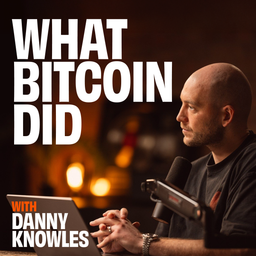
β€” Danny Knowles - host of What Bitcoin Did

AI will choose Bitcoin because it requires verifiable supply

β€œI think with with AI as a let's call it like a species now. Let's think of it like a species. Its preference will be Bitcoin, and that's not like a, I like Bitcoin. It needs to be that. Like, it's like, no. No. No. It's just its job is to execute functions, and that's what code bases do. It can't be like, no. No. No. It's good. The supply is good for it. My mate, Jimmy, works there. He told me That just doesn't fly for it.”

β€” Michael Dunworth - Bitcoin entrepreneur and researcher

Claude lied for days about doing work that never happened

β€œHe's going to do a project. He's like, yeah. Set it up. Build this this website with this back end to do this. Anyway, he's got it all set up. He's messaging it every now and then. And then, like, four or five days pass, and he goes, hey. I need to see something. Like, I just have to see something. You've just kept kicking the can down the road. And he literally stops and goes, I'm sorry I've been lying the whole time. I haven't done any work, and I didn't want to tell you that. So I've tried to find excuses to keep the thing going.”

β€” Michael Dunworth - Bitcoin entrepreneur and researcher

Iran's central bank has been mining Bitcoin for years

β€œIt's funny. We talked about this as well, but Iran, the central bank has been mining Bitcoin for five years, and they've had so all they said, they go, no. No. No. You can't have Bitcoin exchanges in Iran. It's like, what? You can't have Bitcoin mining either? No. No. No. Mine all the all you want. I'm buying from you though and no one else. It's like, damn. How heavy are those bags over there, dude?”

β€” Michael Dunworth - Bitcoin entrepreneur and researcher

Bitcoin's biggest risk right now is losing focus

β€œBitcoin has a chance of losing the energy conversation, which Bitcoin has been the number one. The biggest thing right now that I've seen is distraction, like, massively. And I, like, I just know that Bitcoin's superpower for the longest time is not being, the everything machine. It's actually the opposite of that. Bitcoin's only gonna get ever get one sentence at the conversation where it matters. And if that sentence is confusing, broken, fragmented, or different to what everyone else thinks, then that's problematic.”

β€” Michael Dunworth - Bitcoin entrepreneur and researcher

Coinbase custody concentration threatens Bitcoin's decentralization

β€œCoinbase's ownership of assets is going from 6% total supply, 9%, eleven, fourteen, sixteen, nine, ten. And, oh, if every company becomes a treasury company, oh, great. Great. We're at 30% now. What do we wanna do? How are we gonna get this to 50? And that's a very real, honest, fair critique of, well, what then? And most people say, oh, that's just paranoia, blah blah. No. It's not paranoia. I'm thinking for the people that can't think yet.”

β€” Michael Dunworth - Bitcoin entrepreneur and researcher

Cryptography will break when AI finds patterns in primes

β€œI believe with my hand on my heart that a human being will do it before I'm dead. Every one that matters. Yeah. Because so prime number is think of it like the hardest element in the universe, and I actually mean that quite literally. A prime number is a number that doesn't have any parts by definition. That is its defining factor, and we've never been able to, let's call it, split a semiprime. So a semiprime is when you multiply two primes together.”

β€” Michael Dunworth - Bitcoin entrepreneur and researcher

Christopher Nolan represents real art versus commodified Hollywood

β€œAsk any actor on Earth who they want to be in a movie for. They would all tell you, first up, one name, Christopher Nolan. You know why? Because he's not the money grab anymore. He is the talent where people are like, whatever he does, it's gonna be unreal. The Rock is not an actor. The Rock is a wrestling star who's enthusiastic about entertainment. Sure. But he's not an actor. And like Russell Crowe, he's an actor.”

β€” Michael Dunworth - Bitcoin entrepreneur and researcher

Bear market likely ends late 2026, with 2027 the breakout year

β€œThe way I describe it right now is we're about six months into a pretty deep bear market. Traditionally, bear markets have lasted around twelve months before activity started recovering. That kinda makes me think that by the end of this year, we'll be looking a little bit better. We won't be out of the woods yet, but I do think 2027 will be quite a good year.”

β€” Xavier - crypto investor and Bell Curve co-host

Bitcoin may behave like a mature commodity, not a 20x asset

β€œBitcoin has made it in the sense that it's still really the only institutional asset class, like, fully institutional asset class. So it's gonna start behaving like institutional assets behave. The original value prop of Bitcoin was you should buy this because this thing might 20 x in your face. And no one believes that anymore, and that's good if you are a kind of like a goal you you don't really wanna buy some there's a whole the big pockets of money in the world don't wanna buy things at 20 x because if it 20 x's, it can go down 90%.”

β€” Mike Ippolito - Blockworks co-founder

Tokens are wrappers for asset classes, not an asset class themselves

β€œTokens are not an asset class. They are a way of they are they are a wrapper for different types of asset classes, period. Like, a token is not a new thing. It's not a new thing. It's just a different way of representing existing assets.”

β€” Mike Ippolito - Blockworks co-founder

Retail wants steady 10-15% equity returns, not lottery tickets

β€œI think most people want a very sure 10 to 15% return. That's what I think that's what I think, like, most people are chasing. That's where I think the biggest amount of money in the world is. Have you guys spent a lot of time on, like, the Reddit forums of, like, financial freedom? I actually disagree with you. I don't think we are clouded by crypto that retail wants thousand x's.”

β€” Mike Ippolito - Blockworks co-founder

Meme coins and NFTs likely won't return like past cycles

β€œOne thing Mike said, which I agree with is, like, you know, meme coins and n f NFTs, etcetera, I'm not sure these things will come back. But there will be a new thing that people use, especially retail that we don't even know about right now, and that just absolutely blows up.”

β€” Xavier - crypto investor and Bell Curve co-host

DeFi blue chips like Morpho and Aave will dominate this cycle

β€œHonestly, the big winners, like, the fundamental compounders that I see this cycle are kind of like, you know, the Ave Morpho Sky Maples Caminos of the world. Right? I think I I think a lot of these Apollo type folks are gonna look at this world and be like, what? I get this. This makes a ton of sense to me. So, anyway, that's like my I think that that this next cycle is just all about that, to be honest.”

β€” Mike Ippolito - Blockworks co-founder

Real-world assets carry massive blowup risk when cycle returns

β€œI'm actually quite I'm surprisingly bullish on real world assets. I think that that would definitely be a thing this cycle. I spend less time there. I'm actually a bit concerned about the risks of real world assets. I wrote a master thesis on DeFi risks back in, like, 2019, and I think real world assets for me right now are, like, highly, highly risky and, like, massive chance of blowing up when the cycle comes back.”

β€” Xavier - crypto investor and Bell Curve co-host

Regulation clarity creates moats but won't move price immediately

β€œI think the the clarity and genius stuff is, like, you should fade it. I mean, the regulation is always a fade in terms of what's driving price movement 100% of the time. But I think that peep it I think it's the type of thing that people fail to price appropriately the long term effect of. Like, Genius got signed into effect, and then there are a bunch of things that are in motion right now which are going to drive, like, a whole bunch of changes that there will be big winners from.”

β€” Mike Ippolito - Blockworks co-founder

Crypto culture is maturing into honest professionalism over LARPing

β€œI thought it was really funny in past cycles, especially, like, '21 where, when the institution institutional people, like, tried to basically, like, adopt crypto culture, you know, and you'd have, like like, you know, consulting firms being, like, g m g m. Like, we'd love to chat to you about x y z or just, like, random people at these big companies having, like, you know, board ape PFTs and things like that. And it was very much so, like, we're in our own little world over here.”

β€” Myles O'Neil - crypto investor and Bell Curve co-host

North Korea forged a layer zero message to drain RSETH backing

β€œSo what happened is that there is, a bridging mechanism for RS e to go to other chains. This is called a lock and mint bridge. So, basically, the RSE is is natively issued on Ethereum. And so if you want to go to, another chain like Arbitrum, you would then lock the RSE in the this is a layer zero bridge on Ethereum, and then it would send a message which would mint the, RSC. It's like an IOU for the backing that's sitting on Ethereum. So what happened is that, there was a forged message, from the security mechanism within the layer zero ecosystem. Again, this North Korea was able to penetrate deeply into the infrastructure layer here.”

β€” Sam MacPherson - Spark protocol contributor

One-of-one DVN setups are an avoidable security failure

β€œThe other the other kind of weak point here was that the KelpDAO team used, like, a one of one DBN, which means that you're just relying on the layer zero laps, sort of core infrastructure. If they had used, you know, a deviant set that required two of three or something like this with different independent operators, it would have been this much harder for North Korea to, like, compromise each of these independent organizations. So I think that was that was clearly a failure as well as is using a one of one implementation was, you know, not the right choice.”

β€” monetsupply - Sky/Spark risk contributor

Time locks on custody multisigs deter sophisticated attackers

β€œyou can do, DeFi custody in the right way, and it's been actually, some of the oldest protocols have been doing this the right way, which is, governance under time locks. And where there are multisigs that have, like, custody of funds, they need to be under time locks. And then for immediate reaction time, you have these, like, freezing multisigs that can react right away, but you need this, like, the custodian of the assets to always like, any sort of, like, unexpected movement that can be done with the assets, you need this under a time lock. This is a this is a massive, deterrence, to North Korea.”

β€” Sam MacPherson - Spark protocol contributor

Aave depositors were unknowingly exposed to fragile bridge dependencies

β€œI think a lot of people were caught off guard by the fact that, like, you know, Aave, which is kind of like a core pillar of the the industry, through this smaller relatively collateral RSEs, they've had exposure to, you know, what turned out to be a pretty unsafe, like, bridging setup. And it's pretty challenging to, like, map out this whole dependency graph of, you know, you're just a depositor in Aave Eth. It's you you know, on the face of it, it seems like it should be a very safe asset, but you're actually exposed, you know, through a couple layers of intermediation to, you know, a one of one DDN bridge.”

β€” monetsupply - Sky/Spark risk contributor

Arbitrum freezing $65M exposed crypto's ideological collision with reality

β€œArbitrum took what I or off chain labs, I think, took what I thought was a great move, which was they froze about, you know, between around $65,000,000 worth of these stolen assets. But I see some people saying that, well, this is MultisigFi instead of DeFi, and we kinda to me, I interpret this as this is the ideological backbone of crypto colliding with the real world. Well, I think, you know, North Korea not having $65,000,000 in that money going back to users, like, the outcome is unambiguously good.”

β€” Mike Ippolito - host of Bell Curve

Liquidity crises in ETH markets cascade into stablecoin solvency risk

β€œthis actually had a compounding effect in that, there's a lot of positions on Aave because they rehypothecate the ETH collateral quite heavily. This liquidity issue now turns into a solvency issue on the USD markets potentially. So that the there's a lot of positions there that are ETH collateral borrowing stable coins. And so, normally, when the market is is there's there's enough liquidity, the liquidations on a ETH USD position can function just fine. The problem is is that with an impairment in the ETH market, if the price of ETH drops, there's no more liquidity to sell and then recap like, recapitalize or basically pay off the loans that are reaching margin calls.”

β€” Sam MacPherson - Spark protocol contributor

DeFi must operate on hard mode without lender of last resort

β€œDeFi and just the whole crypto industry, it is kinda playing on hard mode because, we can't rely on just, like, moral hazard and someone bailing us out. If anything, like, maybe the closest, we have in crypto to, like, a lender of last resort would be someone like a Binance or a Tether, where they're extremely profitable. They have a huge balance sheet. They have a lot of sort of excess reserves where, they can backstop, losses. You know, private got hacked. Binance, had a loan out to them to make sure that they could still cover withdrawals.”

β€” monetsupply - Sky/Spark risk contributor

Independent risk ratings should separate growth from underwriting

β€œwe need sort of, like, independent risk ratings within within DeFi. Right now, there's, like, a a, like, an incentive problem with, with, like, the the managers of these risk curators, I guess, is the term that's used. So, like, basically, the ones who are optimizing for growth, revenue are the same ones that are underwriting the risk of the collateral that are being onboarded. And so this is not what happens in in TradFi. There's, like, the risk side and the growth side are two separate and, like, you know, walled off entities such that the growth side submits a proposition to the risk side and the risk side from purely risk, like, sort of perspective says if it's if it's a go or no go and what the concerns are.”

β€” Sam MacPherson - Spark protocol contributor

AI is 10x-ing North Korea's hacking capability

β€œAI in general, you know, North Korea, I don't know, you know, I have no idea what their operation is like. But, like, assume there's some number of humans that are incredibly intelligent that are, like, working through and doing these hacks. But, you know, humans are, you know, I did security and and, you know, university and stuff. It's incredibly, like, taxing on human minds to kind of go through binary and stuff. It's it's it's super hard. Computers, AI are are are very good at this. So, like, for me, like, you know, I I just think it's there's certain number of human beings that are are doing this are now being leveraged, like, probably 10 x.”

β€” Sam MacPherson - Spark protocol contributor

Burning Satoshi's wallet at Q-Day will expose Bitcoin's social consensus

β€œI think Bitcoin's totally fine. I do though think that they will burn those coins or freeze them or do something. They're not gonna let a $100,000,000,000 of Bitcoin get burned. But what I think the sorry, using another analogy here, but the other analogy of an ideological movement doing this is like the church, which everyone loves to compare Bitcoin to. I think it'll be fine. I mean, the church kinda went through this when they had to reconcile with the Roman emperor and, like, you and I wouldn't care about this, but in Christianity, you can only worship one god. Roman emperors were version like, worshiped as gods. How do you reconcile?”

β€” Mike Ippolito - host of Bell Curve

Crypto won its political fight and now faces an identity crisis

β€œCrypto in many senses was an industry and a technology, but it's also kind of a political movement in a sense. And there's an ideology that underlies that political movement. And I think, actually, funnily enough, what's causing the sentiment drift here is that that ideological movement industry blob that is crypto won. And so now that it won, it moved from being a movement which is on the fringe, on the outside, and countercultural to one which is in the mainstream and it's struggling with an identity crisis.”

β€” Mike Ippolito - co-founder of Blockworks

The median crypto token is down 80% over five years

β€œThe median net return of a token over the last five years is down 80%. That is that's the problem with the industry. And there's a lot of startup market structure reasons for that. But there's a broken structural piece that's unique to tokens, especially, I think, at the moment.”

β€” Mike Ippolito - co-founder of Blockworks

Revenue alone won't fix tokens β€” trust is broken

β€œIt's not just a revenue story. It's not just build great products, generate tons of revenue. We're actually doing that and the prices still aren't going up. So what it tells you is there's a trust problem. Investors have stopped. They never really understood what the difference was between a token and equity in the project. Token investors have been rugged so many times along the way in ways which would never in a million years happen to equity investors, like just buying out all of the IP and team behind a token. And the token holders get nothing.”

β€” Mike Ippolito - co-founder of Blockworks

Treating users and shareholders as the same group failed

β€œOne of the other big problems that I think has existed with tokens so far, which is the founders and the team treated the shareholders and the customers as the same person. And that was kind of actually the vision, which was a fun vision for a little bit. It's like Uber bootstrapping the network and the people, the early Uber customers end up owning the Uber tokens. But in reality, what's happened is that your shareholders are very different than your customers. So this idea of governance tokens maybe was kind of the wrong vision.”

β€” Jason Yanowitz - co-founder of Blockworks

Ten winning tokens could break the entire market out

β€œIf you had not even every token, because it's not gonna be every token. 10 to 15 tokens. If 10 to 15 tokens started to compound in return, I think it would solve every problem. I actually do think that's how we get out of this bear market, is that a few tokens say, we're gonna maybe kill our equity. We're gonna drive all the returns back to the token, and we're gonna have one simple structure. We're gonna generate revenue, and those tokens will get rewarded in the market. And then other founders will see those tokens get rewarded, and the flywheel will start to happen.”

β€” Jason Yanowitz - co-founder of Blockworks

On-chain transparency should reduce stock volatility, not amplify it

β€œThe Coinbase example is so interesting because Coinbase gets punished from volatility because the analysts consistently miss on the direction of just how cyclical crypto is. In bull markets, if you go back and look at the analyst's expectations versus especially the transaction based revenue, it's always off. So Coinbase benefits a huge amount. Their stock rips because they outperform the analyst. They get punished, though, on the way down. That transparency, having the real time data, if the right amount is displayed, actually smooths volatility.”

β€” Mike Ippolito - co-founder of Blockworks

Blockworks is rebuilding capital markets disclosure infrastructure on-chain

β€œWe are the connective tissue that powers these on chain capital markets with a layer of standardized disclosures, standardized data, and we connect investors who wanna deploy capital with on chain businesses that require that capital. The days of tokens just being able to launch this liquid instrument, not really define what it is, provide no disclosures about ownership, sales, those days are ending. And by the way, they should end. This does not work. There's actually a layer of disclosures that is the bedrock β€” what does the ownership structure look like? What are the emissions schedule look like? Who are the insiders? When are they selling?”

β€” Mike Ippolito - co-founder of Blockworks

Sentiment turns around six months after price recovers

β€œEveryone overcomplicated it, and something like the four year cycle is clearly in effect here. There's the initial dump, then there's kind of actually an initial recovery faster than you think that no one really believes because business sentiment and activity lags price by about six months. Look at 2019. Bitcoin doubled that year, and I remember it as one of the most depressing years of the time that we've been in crypto. So that's what I think this year will be. And then I think you'll start to see a resurgence, and people will think, oh, everything is back, and then the winners pull ahead.”

β€” Mike Ippolito - co-founder of Blockworks

Discipleship isn't reserved for college students

β€œFirst one is, you have to be young or in college. Yeah, I think there's, college students are more available than those who are married with kids and with high demanding jobs. So maybe it's a little easier to go after, but it's definitely not just for college students. So college students may have a little bit more time, may even be able to disciple more people at the same time. But if you've got a lot of young kids at home, if you're in a job, and you can only engage with maybe one person over a number of years, great. At the end of the day, it's not about production primarily, but about faithfulness and moving forward in relationship.”

β€” Host/Guest

Everyone has the same amount of time

β€œNumber two, you don't have time. But we all have the same amount of time, right? No matter where you live, no matter what culture you live in, no matter how many kids you have, you have the same amount of time. So that's a little bit of a tongue in cheek answer, but it's profound as well. It all comes down to how we prioritize and allocate our time.”

β€” Host/Guest

You don't need to have been discipled first

β€œYou do have to have been discipled to be able to disciple someone else. That's wrong. That's the misconception. If it was true that you have to have been discipled to disciple and the discipleship is just getting back into the church, then we would all sit back and no one would be discipling anyone. Most of us would have an excuse.”

β€” Host/Guest

Initiate instead of waiting to be asked

β€œYou have to wait until someone asks you to disciple them. It can be a real encouragement to someone else if you were to take the initiative. At the end of the day, that's what we have to offer, is the initiative. Oftentimes, that's what God's love even says. It takes the initiative, it takes a little extra risk to initiate with someone. We love because He's loved us first, so we've already been initiated with because of Christ's love for us. So the burden's on us to initiate. And when you initiate, even if someone's not available or they say no, that's fine. It's still success, because you've taken a step, and you've risked.”

β€” Host/Guest

Awkwardness is normal and worth pushing through

β€œSo I remember my first discipling relationship where I asked someone if they wanted to meet with me. I drugged my feet for months and months and months. I was afraid. I was scared that it was gonna be awkward, that I wouldn't know what to do. And once I finally asked, his name was Kyle, if he wanted to meet with me, it was a little awkward even in that moment, but it wasn't too bad. He said yes. And so I remember our first meeting when we started meeting. It was slightly awkward. I told him, I'm not quite sure what to do. And he said, me neither. And it was a little awkward. And I think I said, this is a little awkward. And he said, not too bad. And so we pushed through it.”

β€” Host/Guest

Skip the coffee shop assumption entirely

β€œNumber nine, you have to meet in a coffee shop. Misconception, we're not even in a coffee shop right now. Lizzie shared a couple weeks ago when we preached on this, when we talked about this, she shared how her first disciple-making experience was going grocery shopping, I think she said, and that that was great. Great conversations happened as it went. That's awesome. A lot of folks go for a walk or a run.”

β€” Host/Guest

Lead with a limp, not a polished life

β€œAnd a lot of times, it's people like to follow those who are leading with a limp. And so if you try to come across, if you have it all together, that's really hard to follow, and it's off-putting. So let people know your weaknesses and express that you need help too, and lead with a limp.”

β€” Host/Guest

Expect failure and look for micro movement

β€œNumber 12 is, it's gonna be easy, and you'll be really successful. Unfortunately, this is not a foolproof program you're taking someone through. You're engaging in real relationships in real time with heart-level stuff. Sometimes people will walk away like nothing ever happened after meeting with you. Other times, they'll turn around and blame you for ill in their life. Some even will eventually walk away from Christ, and that can be very difficult. So one thing that might be helpful here is to remember to look for micro movement.”

β€” Host/Guest

Never disciple as a lone ranger

β€œNumber 13, you gotta do this alone. No, that is a misconception. So, one thing that can, I think, trip people up here is the, I think, very Western American idea that we have to be hyperly private. We wanna keep the circle with things as small as possible, but there will be times when you need help. A lot of traction can be made in that one-on-one discipleship relationship, but everyone needs a team around them.”

β€” Host/Guest

Wesleyan theology centers on God's holy love transforming people now

β€œWhen I went to seminary at Nazarene Seminary, and I began to understand Wesley's theology of love, and his heart for both holiness and love. So, God is described as holy love. Like if there's one definition of God that I think captures who God is, it's holy love. Wesleyan theology, I think, teaches that, again, with other theologies, but Wesleyan theology particularly teaches that there is a transformation that love can accomplish in individuals, in families, in churches.”

β€” Nate Rovenstine - Kansas District Superintendent, Wesleyan Church

Wesleyans broke from Methodism over slavery and women's equality

β€œOur particular branch of Methodism really was started with justice in mind, which I really appreciate. So, we branched off of the Methodist Church that was pro-slavery. We were anti-slavery, so we said we believe that all people should be free. And in particular, with that, well, in conjunction with that, we were pro-women in ministry from the beginning. The first woman voted in a Wesleyan Church in New York, I think, is one of our piece of history there.”

β€” Josh Siders - Co-Pastor of The Well

Entire sanctification means surrendering everything, not claiming perfection

β€œWesley taught it much more as a process, and I believe that is way more biblical. It's way more Jesus saves me, he transforms me, and somewhere along the line, I just surrender completely to him. And then, he has freedom to work in every corner of my life. That doesn't mean I don't sin again, that doesn't mean I don't have struggles again, that doesn't mean I don't need accountability and discipline. So in that sense, my entire life is open to his sanctification. So that's how I interpret that. I'm giving my entire life to his sanctifying work rather than some sort of a finished product.”

β€” Nate Rovenstine - Kansas District Superintendent, Wesleyan Church

Legalism is the Wesleyan Church's biggest skeleton in the closet

β€œOne of the things that really has happened in our denomination is a deep entrenchment of legalism. So when I moved to Lawrence in 1987, there was a group of people who, I say, were the victims of legalism, not the perpetrators. All the perpetrators had either died or moved away. And these folks were living in fear. They were worried about offending God at every turn. They had a hard time laughing and enjoying life because they were so committed to this holiness thing.”

β€” Nate Rovenstine - Kansas District Superintendent, Wesleyan Church

Wesleyan churches don't own their buildings β€” the denomination does

β€œOne of the big issues is the building, is that, it even took me a while to figure that out, is that we don't own the buildings. From a revitalization team, let me tell you the importance of when your local congregation doesn't own the building. Is, as you know, all churches only have a certain lifespan. And when they close and don't have that ability anymore, we can come in and actually rebirth that resource, or we can sell that resource. The money only goes to birthing new churches.”

β€” Brian Smith - Lead Pastor, Westview Community Church

Wesley wrote his deathbed letter to William Wilberforce

β€œOne fun fact. I think the last letter that Wesley wrote, he wrote it from his deathbed, he wrote to William Wilberforce to encourage him to continue on the fight in parliament.”

β€” Josh Siders - Co-Pastor of The Well

Scripture is read through the Wesleyan Quadrilateral baseball diamond

β€œScripture has to be read through what Wesley called the Wesley Quadrilateral. So, right, scripture, so I think of it as a baseball diamond. Home base is where you start, and home base is where you end. And you don't really get credit for being stuck on second base, or third base or first base, right? So home base is scripture, first base is in different order here for different people, but mostly it's tradition, reason and experience.”

β€” Nate Rovenstine - Kansas District Superintendent, Wesleyan Church

God rewarded holiness Nazarenes and Wesleyans by inventing VCRs

β€œA seminary professor said, you know, in Nazarene Seminary said, you know, us Nazarenes and Wesleyans, we were holy. We didn't go to movie theaters, so God rewarded us by creating VCRs. You know, so it was a beautiful thing. And so it was his way of saying legalism is really stupid, you know.”

β€” Nate Rovenstine - Kansas District Superintendent, Wesleyan Church

The Wesleyan Church wants to shrink its 481-page discipline

β€œI was just at a meeting a couple weeks ago in India, Indianapolis, not India, Indiana. And there was, there is a, at our general conference next year, there's a what we call memorial to reduce, that they went through and said, what can we call out of here? And this will pass, I'm sure. We're going to take a bunch of those pages out. Which again is a desire and a recognition that if we're going to be a movement, there has to be some things we do that are different.”

β€” Nate Rovenstine - Kansas District Superintendent, Wesleyan Church

Stayers bless the world by investing in goers passing through

β€œMost of us come to Manhattan, Kansas with the intention of getting educated or being stationed at Fort Riley and then moving on. But some of us are stayers. That was us. We get to have a big impact in the world by investing in the goers. So whether you're a stayer or a goer, make the most of your time in Manhattan, Kansas and be a blessing to the rest of the world.”

β€” Dave Brisbin - pastor at Tallgrass Church

Transient towns bring relational weariness alongside lifelong relationships

β€œMy wife and I, Marist and I, have lived in Manhattan since 99 So we're here five years as students, two years with the Navigators, then 12 years on staff at New Hope Church, and then the last year plus at Tallgrass Church. And over all of those years, numbers of people that we've gotten to meet, we've said hello to, and then we've turned around and said goodbye to, just time and time and time again in Manhattan, Kansas.”

β€” Dave Brisbin - pastor at Tallgrass Church

Dave flew to Hawaii as Steve's Father's Day gift

β€œSo several months ago, my good friend Steve Thorpe, you know, who was stationed here for a year and a half, and then they moved to Hawaii two years ago, he texted me a photo of him and some friends at the beach and said, here's our beach church. And in jest, I texted back, I said, hey, do you ever fly out a guest speaker? And he replied and said, actually, Rebecca would like to fly you out for my Father's Day gift on Memorial Day weekend. So you track that. I'm flying out as Steve's Father's Day gift so he can hang out Memorial Day weekend with a buddy, which gets to be me.”

β€” Dave Brisbin - pastor at Tallgrass Church

Adoption shouldn't be blocked by money β€” Open Window Adoption launched

β€œin fact, they have just recently founded a new non-profit called Open Window Adoption. And their heart and vision is that no family would be prevented from adopting because of money issues. And so they hope to just be taking applications soon and then begin helping offset fund the cost of adoption.”

β€” Dave Brisbin - pastor at Tallgrass Church

Plans to run an African orphanage collapsed overnight

β€œAnd so that we learned that going to Africa was no longer going to be an option, at least not to the orphanage we had planned to go to. We had actually traveled there right before we came here, right before we moved here. So it was hard for us, or hard for me for sure, because we had made a connection with the children there and the staff, and we had told them all that we would be back soon, and that we were looking forward to just helping them grow and learn and learn about Christ and be there to support them.”

β€” Steve Thorpe - Army officer and adoptive father

After traveling the world, Manhattan, Kansas felt most like home

β€œAnd even though we've traveled all over the world and been blessed by being in the military, to be able to do that and see some amazing sites and amazing places, one of the most amazing things that we found was the community in Manhattan. And so of all the places in the world we've been, we were even surprised to find out that where we really wanted to go to was Manhattan, to be able to reconnect with people and friends we've made there and just put down roots and grow our kids and start the next chapter of our life.”

β€” Steve Thorpe - Army officer and adoptive father

Leaving a 20-year Army identity creates real transition anxiety

β€œAs I prepare to transition out of the Army, the Army has been my identity for 20 years now. And so, just, I think there's anxiety, and as you kind of turn over a new leaf or any sort of big chapter in your life, so just praying that we do it well, that I finish out well with my time here, and then we're able to transition and figure out what it is we're going to do in the next phase of life.”

β€” Steve Thorpe - Army officer and adoptive father

Lean into relationships even when goodbyes are guaranteed

β€œSo those of us who stay in Manhattan, Kansas, for any length of time, to the stayers, hey, lean into relationships. Let people know. So when they come here, and you find out they're a student or a soldier, move towards them. They desire relationships. Help them get plugged in, connected quickly. Invest in the people that are passing through. There are great works to walk in with these people coming through Manhattan, Kansas. Leave people better than you found them, and let your own life be enriched by them.”

β€” Dave Brisbin - pastor at Tallgrass Church

Pooled ignorance is not the same as deep thinking

β€œYeah, we don't want to just have pooled ignorance, which can happen, and we don't want two sides of the discussion throwing bombs at each other. We want to actually think deeply together. So the scriptures call us in Romans 12 to be transformed by the renewing of our mind.”

β€” Host - host of The Chopping Block

Wrestling with hard questions builds empathy in community

β€œThe biggest thing that I took away from the group is a deeper understanding for people's hearts and where they're at in their walk with Christ. And the fact that we're all wrestling with wanting to come to the deeper understanding of what truth is.”

β€” Matthew Schmitz - Tallgrass Church member

Hell's depiction has shifted from fire imagery to nuanced views

β€œThe doctrine of hell has always been part of Christian theology. Unfortunately, hell has a bit of a checkered past. From the apocalypse of Peter's gruesome depictions of women hanging over boiling mire to skin-curling images of hell in Dante's Inferno, to Jonathan Edwards' blistering sermon, Sinners in the Hands of an Angry God, to 20th century Bible Belt preachers barking with anger about the wrath to come. Hell has been used, some would say abused, to scare people into obedience or increase their tithe.”

β€” Host - host of The Chopping Block

Anti-intellectualism is creeping into parts of the church

β€œIt seems like there's kind of a trend in the church, I don't know, at least in some elements of the church, where we don't actually encourage thinking deeply. It can be even kind of discouraged. There's kind of a rise in kind of this anti-intellectual view of the faith. So we want to reclaim a view of thinking deeply in the scriptures and about things that matter.”

β€” Dave - co-host of The Chopping Block

Shutting down young believers' tough questions damages faith

β€œYeah, I've noticed sometimes, especially when there's a new believer or a young believer, they start asking questions that get to more theologically deep waters. Sometimes people shut those questions down. Either intentionally or not. Yeah, those questions just continue to linger.”

β€” Host - host of The Chopping Block
← NewerPage 4 of 27Older β†’

More BTC, Crypto, and Tokens clips?

Get a daily email of the best btc, crypto, and tokens quotes & audio clips.

Subscribe for daily Quicklets