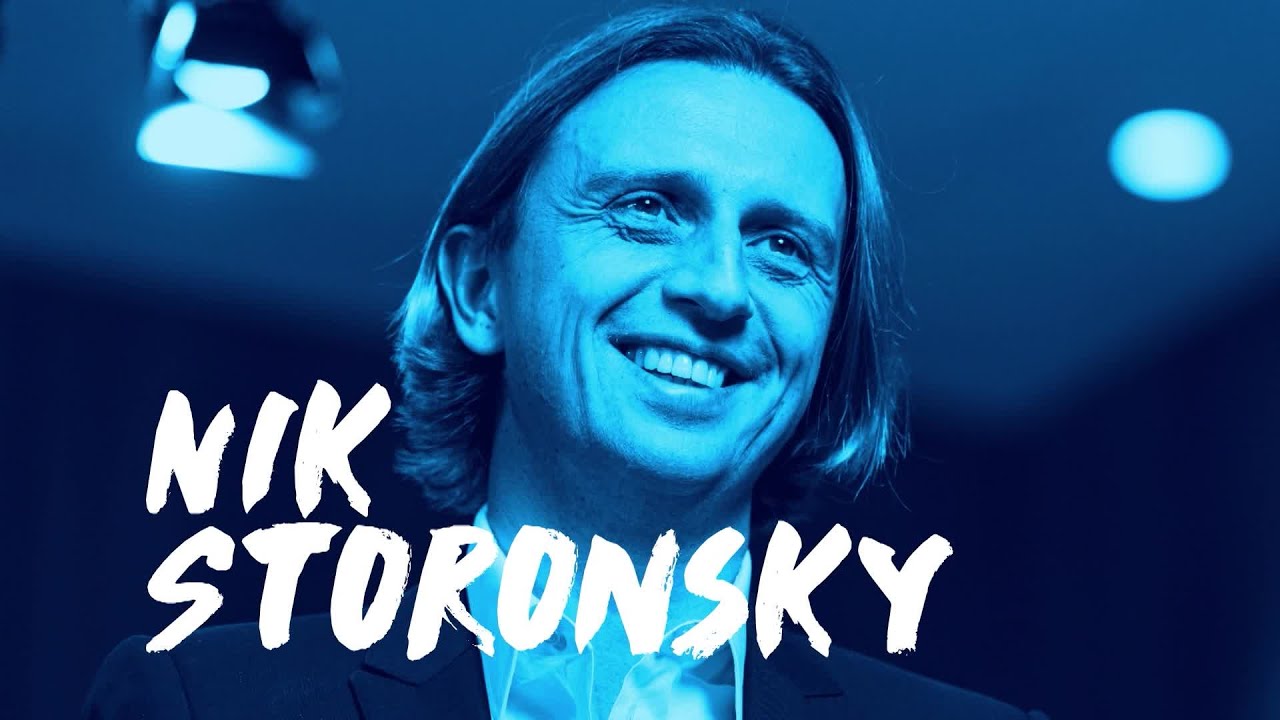
“Majority of time I dedicate still to Revolut. We're still scratching the surface in terms of what is possible in building first truly global bank. Now we're in 40 countries, we want to be in 100 countries.”
“My initial idea was to build a product, a simple app with a card attached to it that allows you to spend money anywhere in the world at interbank rate. So saving effectively $50 to $70 in every $1,000 that you spend.”
“Well, the way I think about it, we kind of will be ready probably in two years' time. But then again, depends on how good the market is. So we're a bank, and then for the bank, it's super important to have trust, and then public companies are trusted more compared to private companies.”
“I think it's obviously much easier for us, given the new administration, plus that we have so many other banking licenses, plus we have a banking license in the UK now. So for us, it became much easier compared to two years ago.”
Quantum Light uses machine learning for venture investing
“In terms of investment, I think there has to be a scientific approach rather than human judgment. And then we build effective models that invest in startups, Series B, based on millions and millions of data points on startups. So they are trained machine learning models that invest.”
Legacy banks will face increased digital consolidation
“In five, ten years' time, we'll see more and more consolidation. I think we'll see more and more certain digital champions in the regions taking more and more banking shares in these regions. Maybe it will take ten years, maybe it will take fifteen years, twenty years. But I do think that we'll see less and less legacy banks.”
Hiring focuses on IQ over specific trading experience
“We're just looking for ultimately three things. First is high IQ or brains, and then we have certain ways how to understand whether a person is smart or not, whether they're logical or not. That's number one. Number two is character, how ambitious they are, how hungry they are. And third is skills.”
The simple mathematical realization that led to the founding of Revolut
“I was a trader back then. I learned very quick in calculating numbers in my head. And then every time when I went abroad or when I send money, I could calculate like I was here, $10, $50 and so on. And my initial idea was to build a product is simple, up with a card attached to it that allows you to spend money anywhere in the world at inter-bank rate. So saving effectively 50 to $70 and every $1,000 that you spent.”
How Revolut scaled to millions of users with zero marketing spend
“We didn't spend any single marketing for the first 5 to 7 years of our being in operation. So it was all word of mouth. So I remember when I finally launched the product, it was summer 2015, and I physically was selling my product to friends, family, even people I don't know.”
The staggering market penetration of Revolut across Europe and Ireland
“In Europe, we have 20% penetration. So one out of five adults in Europe, they use Revolut. It calls and then I said, Don't like us. We have much higher penetration. For example, in Ireland we have four out of five adults using Revolut.”
Witnessing the collapse of Lehman Brothers from the trading floor
“I was one of probably 200 people on the trading floor where it all happened. I still remember there was or the Sunday evening announcement that I was wondering. I kept learning to come on Monday morning to my job. So I came out. Then I had all this 200 traders looked at one trading floor, everything. All the systems were locked, were all playing the same game. I think it was like game shooting helicopters or something. All, all different people because there was nothing to do.”
Applying a purely scientific machine-learning approach to venture capital
“As entrepreneur, I've done a lot of fundraising roles for the business and then I think a certain point of time I was very pissed off with the growth. Thinking. Mentality right. I think there has to be a scientific approach rather than human judgment. And then we build effective models. Let's invest in start UPS series, be based on millions and millions data points on start ups. So they're trained machine learning models that invest.”
The inevitable decline of legacy banks as digital champions take over
“In five, ten years, then we'll see more and more consolidation. I think we'll see more and more sort of digital champions in the regions taking on more and more banking shares in those regions. So maybe this will take ten years, maybe it'll take 50 years, 20 years. But I do think that we'll see less and less legacy banks or less and less the legacy banks will make so much money.”
The three core traits required to work at a high-growth fintech
“We're just looking for ultimately three things. First is a high IQ of brains, and then we have certain ways how to understand whether a person is smart or not, whether they are ideological or not simple one. Number two is their character, how ambitious they are, how hungry they are. And third is their skills for heart desire. They need to be good at design and so on.”